Andhra Food Culture: A Deep Dive into Cuisine & Traditions
Unveiling the Richness of Andhra Food Culture: A Culinary Journey
Andhra Pradesh, a land renowned for its vibrant history, scenic landscapes, and fervent traditions, boasts a culinary heritage as fiery and diverse as its people. From the scorching Guntur chillies that define its heat to the tangy tamarind that provides its signature sourness, Andhra Pradesh cuisine is an exhilarating adventure for the palate. It's a cuisine deeply rooted in history, shaped by geography, and perfected through generations of passionate home cooks. More than just a collection of recipes, it represents a profound Andhra food culture, where every meal is a celebration of flavor, community, and tradition.
Join us on a journey to explore the heart of Andhra's culinary identity, delving into its unique ingredients, time-honored cooking methods, and the stories behind its most beloved dishes. Prepare to immerse yourself in the authentic tastes and traditions that make Telugu food a celebrated part of India's gastronomic landscape.
The Tapestry of Andhra Pradesh Cuisine: From Ancient Roots to Regional Delights
The foundation of Andhra Pradesh cuisine is built upon centuries of history, influenced by various dynasties, trade routes, and the very geography of the region. This rich tapestry has woven together distinct culinary threads, creating a diverse and captivating food culture.
Historical Roots and Influences on Telugu Food
The genesis of Telugu food can be traced back to ancient times, with references to specific dishes and ingredients found in historical texts and inscriptions. The fertile lands along the Krishna and Godavari rivers provided an abundance of rice, lentils, and vegetables, forming the staple diet. Over centuries, various empires, including the Satavahanas, Kakatiyas, and Vijayanagara rulers, left their indelible marks, influencing cooking techniques and ingredient preferences. The emphasis on fresh, local produce, combined with a sophisticated understanding of spices, became the hallmark of Andhra cooking traditions. The Portuguese and later the British also introduced new ingredients like potatoes and tomatoes, which were skillfully integrated into the existing culinary framework.
Regional Variations: A Culinary Spectrum within Andhra
Andhra Pradesh, with its long coastline, fertile deltas, and arid Rayalaseema region, presents fascinating regional variations in its cuisine. While a unifying spiciness and tanginess prevail, the nuances differ significantly:
- Coastal Andhra (Kosta): This region, encompassing districts like Guntur, Krishna, and Godavari, is the heartland of fiery chilli-laden dishes. Seafood, naturally, plays a significant role, with dishes like Chepala Pulusu (fish curry) and Royyala Iguru (prawn fry). The use of fresh green chillies and a heavy hand with tamarind defines its vibrant flavors. It's here you'll find some of the most iconic and robust examples of Andhra Pradesh cuisine.
- Rayalaseema: Known for its rugged terrain and hot climate, Rayalaseema cuisine is characterized by its rustic, hearty, and often spicier fare. Millet-based dishes like Ragi Sankati (finger millet balls) served with spicy curries, and dry spice powders (karam podi) are common. The flavors here are bold and unpretentious, reflecting the resilience of the land.
These regional differences contribute to the incredible depth and variety found within Andhra food culture, offering a unique experience with every bite.
Core Ingredients and Flavors of Telugu Food: The Essence of Authenticity
The magic of Telugu food lies in its judicious use of core ingredients, each contributing to a symphony of tastes that are simultaneously complex and comforting. Understanding these building blocks is key to appreciating the depth of Andhra Pradesh cuisine.
The Spice Palette: Chillies, Tamarind, and More
No discussion of Andhra food is complete without acknowledging its bold use of spices. Guntur Sannam chillies are legendary for their heat and distinct flavor, forming the backbone of many curries and pickles. Tamarind provides the characteristic sourness (pulusu), balancing the heat and adding depth. Other essential spices include mustard seeds, fenugreek, cumin, coriander, turmeric, and fresh curry leaves, all expertly blended to create the unique flavor profiles of Andhra cooking traditions.
Grains and Legumes: Staples of South Indian Food Culture
Rice is undoubtedly the king of grains in Andhra, served at almost every meal, often as the primary vehicle for curries, dals, and pickles. Various lentils (pappu), especially toor dal, are fundamental, prepared in countless ways – from simple dal tadka to elaborate spinach dals (palakura pappu). These staples are a common thread across all of South Indian food culture, providing essential nutrition and forming the comforting core of any meal.
The Art of Pickles and Podis: Essential Accompaniments
Perhaps one of the most defining aspects of Andhra food culture is its unparalleled passion for pickles (pachadulu) and spice powders (podis). These aren't just sides; they are integral to the meal, offering bursts of flavor, texture, and often, a powerful kick. From the world-famous Avakai (mango pickle) to the tangy Gongura Pachadi (roselle leaves pickle), the range is astounding. These condiments showcase the preservation wisdom inherent in Andhra cooking traditions.
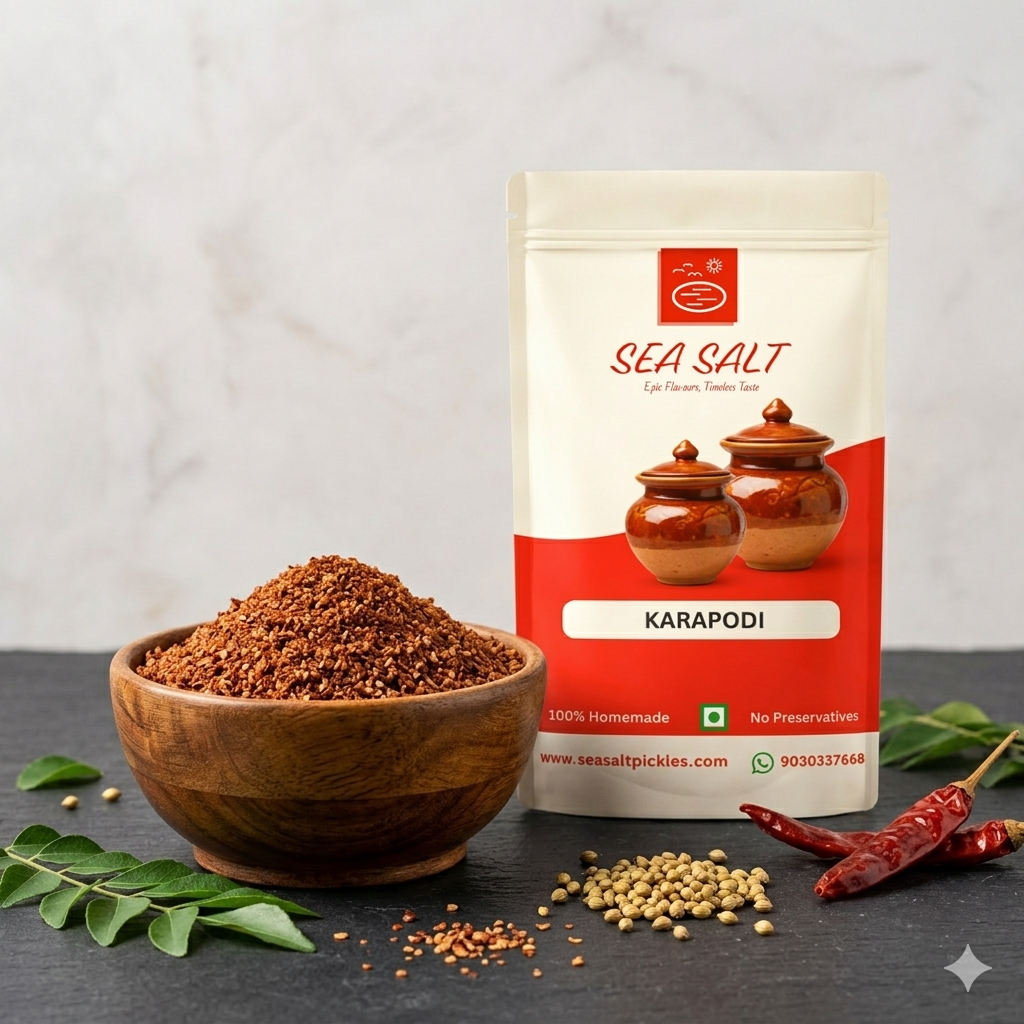
Similarly, podis are versatile spice blends that elevate simple meals. Take, for instance, our very own Kara Podi from Sea Salt Pickles. Crafted with a meticulous blend of roasted lentils and aromatic spices, this everyday podi is a testament to the simplicity and flavor found in traditional Andhra kitchens. A sprinkle of Kara Podi with a dollop of ghee on hot rice, or alongside idlis and dosas, can transform a meal. It's a perfect example of how complex flavors are extracted from humble ingredients, a core tenet of Telugu food. Explore our authentic range of podis and pickles at seasaltpickles.com to experience these essential tastes yourself.
Andhra Cooking Traditions: Time-Honored Techniques and Culinary Wisdom
The deliciousness of Andhra Pradesh cuisine isn't just about ingredients; it's equally about the age-old cooking techniques and wisdom passed down through generations. These Andhra cooking traditions ensure that every dish achieves its characteristic flavor and texture.
From Grinding to Tempering: Essential Methods
- Fresh Grinding: The hallmark of authentic Andhra cooking is the use of freshly ground spices. Wet grinding of chutneys (pachadi) and masalas for curries is common, ensuring maximum flavor and aroma.
- Tempering (Popu/Tadka): This crucial technique involves heating oil with mustard seeds, cumin, curry leaves, and sometimes dried red chillies and urad dal. This tempering is then added at the beginning or end of a dish, infusing it with an incredible aromatic depth that is fundamental to Telugu food.
- Slow Cooking: Many curries and stews, particularly those with meat or tougher vegetables, are slow-cooked to allow flavors to meld and ingredients to tenderize perfectly.
The Role of Freshness and Seasonality
Traditional Andhra food culture places immense importance on using fresh, seasonal ingredients. Vegetables are sourced locally, often from home gardens, and meats and seafood are procured fresh daily. This commitment to freshness ensures that the inherent flavors of the ingredients shine through, making the cuisine vibrant and wholesome.
Community and Culinary Rituals
Food in Andhra is often a communal affair. Cooking for festivals, weddings, or family gatherings involves multiple hands, reflecting the strong community bonds. The sharing of recipes, the joy of collective cooking, and the pride in serving a delicious meal are all integral parts of Andhra cooking traditions.
Hyderabad Food: A Royal Legacy within the Telugu Culinary Landscape
While geographically distinct now, Hyderabad's culinary heritage is deeply intertwined with the broader Telugu food landscape and holds a significant place in understanding the diverse influences on South Indian food culture. Hyderabad, the capital of Andhra Pradesh until the state's bifurcation, developed a unique cuisine under the Nizams.
Nizami Influences and Distinctive Hyderabad Food
The Nizams of Hyderabad, who ruled for centuries, were patrons of fine arts and cuisine. Their kitchens gave birth to the legendary Hyderabad food, characterized by its richness, aromatic spices, and slow-cooking techniques (dum style). Iconic dishes like Hyderabadi Biryani, Haleem, Mirchi ka Salan, and Double ka Meetha are global ambassadors of this royal culinary legacy.
Fusion of Andhra and Mughal Flavors
Hyderabad food masterfully blends the spicy, tangy flavors of traditional Andhra cooking with the rich, aromatic, and often creamy textures of Mughal and Persian cuisines. This fusion created a unique culinary identity that stands apart, yet complements, the spicier regional Andhra dishes. The use of saffron, dry fruits, and specific cuts of meat, combined with local spices, exemplifies this exquisite blend.
The Meal Experience: More Than Just Food in South Indian Food Culture
In Andhra, a meal is much more than sustenance; it's a sensory experience, a ritual, and a core aspect of South Indian food culture. The way food is served and consumed tells a story of tradition and hospitality.
Traditional Serving and Eating Practices
Traditionally, meals are served on fresh banana leaves, believed to impart a subtle flavor and offer health benefits. The sequence of dishes is often specific: a dollop of rice, ghee, and a podi or pachadi to start, followed by various curries (koora), stews (pulusu), and dals (pappu), finishing with curd rice (perugu annam). Eating with hands is customary, enhancing the tactile connection with the food and its flavors. This practice is a deeply ingrained part of Andhra food culture.
Festivals and Feasts: Culinary Celebrations
Festivals are inseparable from food in Andhra. Ugadi (Telugu New Year) features Ugadi Pachadi, a symbolic dish with six tastes representing life's emotions. Sankranti, the harvest festival, brings forth sweet delicacies like Ariselu and Boorelu. Every celebration has its special menu, prepared with devotion and shared with joy, reinforcing the communal spirit of Telugu food.
Embrace the Authentic Flavors of Andhra Pradesh
The journey through Andhra food culture reveals a culinary landscape brimming with vibrant flavors, ancient traditions, and an unwavering passion for good food. From the scorching heat of Guntur chillies to the tangy embrace of tamarind, and the comforting staple of rice and lentils, Andhra Pradesh cuisine offers an experience that is both exhilarating and deeply satisfying. It's a testament to the richness of South Indian food culture, where every dish tells a story of heritage, community, and exquisite taste.
Whether you're exploring the rustic charm of Rayalaseema dishes or savoring the refined elegance of Hyderabad food, the essence of Andhra lies in its authenticity and the love poured into its preparation. We invite you to delve deeper into these culinary treasures and bring the authentic tastes of Andhra into your home.
Frequently Asked Questions about Andhra Food Culture
1. What are the key characteristics of Andhra Pradesh cuisine?
Andhra Pradesh cuisine is primarily known for its intense spiciness, achieved through the generous use of Guntur chillies, balanced by a distinct tanginess from tamarind, and a rich variety of regional dishes, pickles, and spice powders (podis).
2. How is Hyderabad food different from other Andhra dishes?
Hyderabad food, a legacy of the Nizams, is a fusion of local Telugu flavors with Persian and Mughal influences. It is generally richer, more aromatic, and less overtly spicy than traditional Andhra dishes, featuring slow-cooked biryanis, kebabs, and creamy gravies.
3. What is the significance of pickles and podis in Telugu food?
Pickles (pachadulu) and spice powders (podis) are indispensable in Telugu food. They serve as essential accompaniments that add immense flavor, zest, and variety to every meal, often acting as the main flavor component when paired with simple rice and ghee, embodying true Andhra cooking traditions.
4. Where can I find authentic Andhra spices and ingredients?
Authentic Andhra spices and ingredients can be found in specialty Indian grocery stores, online ethnic food retailers, and directly from brands that specialize in traditional Andhra products. For premium homemade pickles, masalas, and snacks that capture the essence of Andhra food culture, visit seasaltpickles.com.
Ready to Experience Authentic Andhra Flavors?
Don't just read about the exquisite Andhra food culture; taste it! Explore our range of premium homemade pickles, masalas, and snacks at seasaltpickles.com. From our versatile Kara Podi to our other authentic Andhra delights, we bring the rich Andhra cooking traditions directly to your kitchen. Shop now and transform your meals with the vibrant, unforgettable flavors of Hyderabad and Andhra Pradesh!