Avakaya Pickle Recipe: Authentic Andhra Mango Delight
The Golden Standard: Unveiling the Authentic Andhra Avakaya Pickle Recipe
Welcome, food enthusiasts, to a culinary journey into the heart of Andhra Pradesh! When one speaks of Andhra cuisine, a symphony of robust flavours, aromatic spices, and a fiery zest immediately comes to mind. At the very pinnacle of this flavour pyramid stands the legendary Avakaya Pickle. More than just a condiment, it's a cultural icon, a grandmother's legacy, and an indispensable part of every Telugu household.
For generations, the art of making authentic Andhra Avakaya has been passed down, a cherished tradition that heralds the arrival of summer. The sight of mangoes drying under the sun, the aroma of freshly ground spices, and the rhythmic sound of mangoes being cut are all synonymous with this beloved pickle. While many attempt to recreate its magic, the true essence lies in understanding the precise balance of ingredients and the meticulous process that transforms humble raw mangoes into a gastronomic masterpiece.
At Sea Salt Pickles, we understand the profound connection you have with traditional flavours. While we pour our passion into crafting premium homemade Andhra pickles, masalas, and snacks, we also believe in celebrating the heritage behind these culinary treasures. Today, we invite you to roll up your sleeves and discover the secrets behind the quintessential raw mango pickle that is Avakaya.
The Heart of Andhra: Understanding Avakaya's Legacy
Avakaya is not merely a mango pickle recipe; it's an emotion. It's the taste of home, the comfort of tradition, and the spice that elevates even the simplest meal. This vibrant, spicy, and tangy condiment is a staple, gracing dining tables from bustling cities to serene villages. The term 'Avakaya' itself is derived from 'ava' (mustard) and 'kaya' (raw mango), highlighting its two primary ingredients. It's a testament to the ingenuity of Andhra's culinary heritage, transforming seasonal bounty into a year-round delight.
While there are numerous variants of telugu pickle, Avakaya holds a special place. Its rich, dark red hue, courtesy of sun-dried Guntur chillies, is as iconic as its intense flavour. Every family often has its own subtle twist, a secret ingredient or a specific technique that makes their avakaya pachadi unique. But the core principles remain the same: fresh, firm mangoes, pungent mustard, fiery chilli, and just the right amount of salt and oil, all coming together in a harmonious blend that ferments into pure bliss.
Essential Ingredients for Authentic Avakaya Pickle
Crafting the perfect Avakaya begins with selecting the finest ingredients. Each component plays a crucial role in developing the complex flavour profile that defines this iconic Andhra Avakaya.
Mangoes: The Star of the Show
The choice of mango is paramount. You need firm, sour, raw mangoes that are not fibrous. Traditional Andhra varieties like Kothapalli Kobbari (coconut mango) or Totapuri (though less sour, still used) are ideal. They should have a thick skin and a hard, crisp flesh that doesn't soften too quickly. The mangoes must be absolutely fresh and free from any blemishes.
- Selection: Choose firm, unripe, sour mangoes without any soft spots.
- Preparation: Wash the mangoes thoroughly and dry them completely with a clean cloth. There should be no moisture. Traditionally, they are cut into uniform 1-inch pieces along with the inner seed shell (pit). If you're not comfortable with the pit, you can remove it, but many prefer the traditional cut. Spread the cut pieces on a clean cloth indoors for a few hours to ensure they are completely dry, sometimes even overnight. This step is critical for preventing spoilage.
Mustard Powder (Aavalu)
This is the soul of Avakaya. Freshly ground mustard powder (from yellow or black mustard seeds) provides the characteristic pungent flavour. It's crucial to use good quality, fresh mustard seeds and grind them just before use for maximum aroma and potency.
Red Chilli Powder (Karam)
The heat and vibrant colour come from this. Andhra's Guntur Sannam chillies are famous for their intense heat and rich red colour. Adjust the quantity according to your spice preference, but don't shy away; Avakaya is meant to be spicy!
Fenugreek Seeds (Menthulu)
Lightly roasted and ground fenugreek seeds add a subtle bitterness and a distinct aroma, balancing the other strong flavours and acting as a natural preservative.
Salt (Uppu)
Coarse crystal salt or rock salt is traditionally used, as it dissolves slowly and helps in the fermentation process without clumping. Ensure it's clean and free from impurities.
Sesame Oil (Nuvvula Nune)
Cold-pressed pure sesame oil (gingelly oil) is the traditional fat of choice. It contributes significantly to the unique taste, aroma, and preservation of the avakaya pickle. Do not skimp on quality here.
Garlic (Vellulli) - Optional but Recommended
Peeled garlic cloves are often added, especially in certain regional variations. They infuse a wonderful aroma and an additional layer of flavour.
Proportions (approximate for 1 kg raw mango pieces):
- Raw Mango Pieces: 1 kg
- Mustard Powder: 200g
- Red Chilli Powder: 150-200g (adjust to taste)
- Fenugreek Powder: 25g
- Crystal Salt: 150-180g (adjust to taste, usually 1/6th to 1/5th of mango weight)
- Sesame Oil: 400-500ml (enough to immerse the mango pieces)
- Garlic Cloves (peeled): 50-100g (optional)
Step-by-Step Guide: Crafting Your Authentic Avakaya Pickle
This is where the magic happens. Follow these steps carefully to create your very own batch of this glorious raw mango pickle.
Preparation
- Mango Preparation: As mentioned, wash, dry, and cut the mangoes into 1-inch pieces. Ensure they are bone-dry before proceeding.
- Spice Preparation:
- Mustard: Dry roast mustard seeds lightly until fragrant (don't burn). Let them cool completely, then grind to a fine powder.
- Fenugreek: Lightly dry roast fenugreek seeds until they change colour slightly and become aromatic. Cool and grind to a fine powder.
- Garlic: If using, peel the garlic cloves. You can keep them whole or lightly crush them.
- Oil Preparation: Traditionally, sesame oil is heated gently until it just begins to smoke, then cooled completely. This helps in extending shelf life. Ensure it's entirely cool before mixing.
Mixing the Magic
- In a very large, wide, and absolutely dry mixing bowl, combine the mango pieces.
- Add the mustard powder, red chilli powder, fenugreek powder, and crystal salt. If using garlic, add it now.
- Using a large, dry spoon or your clean, dry hands (wearing gloves is recommended), mix all the ingredients thoroughly. Ensure every mango piece is well coated with the spice mixture.
- Gradually add the cooled sesame oil to the mixture. Mix well, ensuring the oil coats all the mango pieces and spices evenly. The mixture should look moist and glistening.
The Fermentation Process
- Jarring: Transfer the entire mixture into a large, clean, and absolutely dry ceramic jar (bharani) or a food-grade plastic container. Press down gently to remove any air pockets.
- Sealing: Pour a thin layer of sesame oil on top of the pickle mixture to act as a seal. Cover the jar with a clean cotton cloth and tie it securely, then place the lid on top. This allows air circulation while preventing dust.
- Resting & Stirring (The 'Mukku'):
- Day 1: Let the jar rest in a cool, dry place.
- Day 2: Open the jar, give the pickle a thorough stir with a long, dry wooden spoon. The mango pieces will have released some moisture, and the spices will have begun to absorb the oil. Cover again.
- Day 3: Repeat the stirring process. By now, the mangoes should have softened slightly, and the flavours will be mingling beautifully. The oil should be visible on top. This 'mukku' or initial stirring is crucial for even fermentation and flavour distribution.
- Optional Sun-drying: Some traditionalists prefer to spread the mixed pickle on a clean, dry sheet for a few hours in direct sunlight after the 'mukku' period, ensuring it's covered with a mesh to prevent insects. This intensifies the flavour and extends shelf life.
Storage and Longevity
After the 3-day fermentation, your Avakaya Pickle is ready to be enjoyed! Transfer it into smaller, sterilised, dry glass jars for daily use. Always ensure there's a layer of oil covering the pickle to prevent fungal growth. Use a clean, dry spoon every time you take out the pickle. Stored properly, homemade Avakaya can last for a year or even longer, its flavour deepening with time. This mango pickle recipe is truly a labour of love that yields long-lasting rewards.
Tips for Avakaya Perfection
- Hygiene is Key: Ensure all utensils, jars, and surfaces are impeccably clean and absolutely dry. Moisture is the enemy of pickles.
- Quality Ingredients: Don't compromise on the quality of mangoes, spices, or oil. This directly impacts the taste and shelf life.
- Patience: Allow the pickle to ferment for the recommended days. The flavours need time to meld and mature.
- Oil Layer: Always ensure a visible layer of oil on top of the pickle, especially in the storage jar, to prevent spoilage.
- Taste Test: After the initial fermentation, taste and adjust salt if necessary, though it's best to stick to traditional ratios.
- Sunlight: While not strictly necessary if prepared hygienically, a few days of sun exposure can enhance the flavour and longevity.
Serving Suggestions: Beyond the Plate
The beauty of Andhra Avakaya lies in its versatility. It's most famously enjoyed with hot, steaming rice mixed with a dollop of ghee, a combination that's pure heaven. But its applications extend far beyond:
- Pair it with curd rice for a tangy-spicy contrast.
- Serve alongside dosa, idli, or pesarattu for an Andhra breakfast delight.
- It can elevate a simple dal and roti meal.
- A tiny dab can add a fiery kick to sandwiches or wraps.
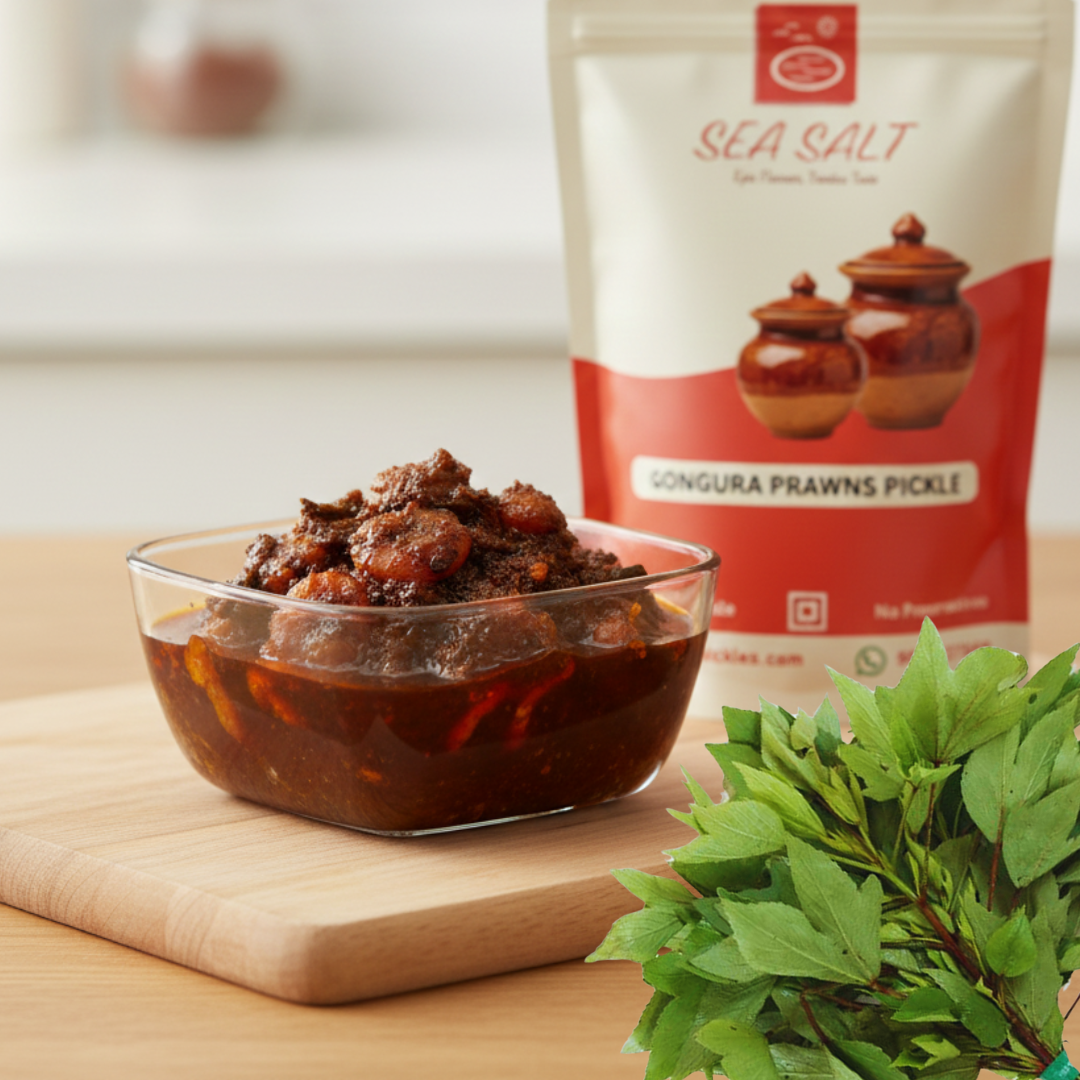
The bold, authentic flavours of Andhra cuisine, like those in a traditional Avakaya Pickle, are truly captivating. Just as this pickle enhances a meal, other Andhra delicacies can transform your culinary experience. For instance, the robust and tangy flavours in our Gongura Prawns (Rs. 850) offer another taste of Andhra's rich culinary tapestry, perfect for when you crave something equally vibrant and unique.
Why Homemade Avakaya is Special
There's an undeniable charm and satisfaction in making your own avakaya pickle. It's a connection to tradition, a labor of love, and a testament to homemade goodness. The aroma that fills your home during its preparation, the anticipation of its readiness, and the joy of sharing it with loved ones are experiences unmatched.
However, we understand that not everyone has the time or resources to embark on this elaborate culinary adventure. That's precisely why Sea Salt Pickles exists – to bring you the authentic, premium flavours of homemade Andhra pickles, masalas, and snacks, crafted with the same love, tradition, and quality ingredients that you'd use in your own kitchen.
Frequently Asked Questions (FAQ)
Q1: How long does homemade Avakaya last?
When prepared hygienically and stored correctly in airtight, dry jars with a layer of oil on top, authentic Avakaya Pickle can last for 1 to 2 years, often even longer. Its flavour typically deepens over time.
Q2: What type of mango is best for Avakaya?
The best mangoes are firm, very sour, and unripe varieties with a thick skin and crisp flesh. Traditional Andhra varieties like Kothapalli Kobbari or specific local varieties known for pickling are ideal. Avoid fibrous or slightly ripe mangoes.
Q3: Can I make Avakaya without sun-drying?
Yes, you can. While sun-drying is a traditional practice that helps intensify flavour and extends shelf life, it's not strictly mandatory if you maintain strict hygiene and proper storage. Ensure all ingredients and utensils are completely dry.
Q4: Why did my Avakaya spoil or develop fungus?
Spoilage or fungus usually occurs due to moisture. Common reasons include using wet mangoes or utensils, not enough salt, insufficient oil cover (allowing air exposure), or using low-quality oil. Always ensure everything is bone-dry and there's a protective layer of oil.
Embrace the Flavours of Andhra with Sea Salt Pickles
Creating your own Avakaya Pickle is a truly rewarding experience, connecting you to the rich culinary heritage of Andhra Pradesh. Whether you're a seasoned pickle maker or a curious beginner, we hope this comprehensive guide inspires you to try your hand at this iconic mango pickle recipe.
However, if time is short, or you simply crave the convenience of ready-to-eat, authentic Andhra flavours without the effort, Sea Salt Pickles is here for you. We meticulously craft each product, from fiery pickles to aromatic masalas and irresistible snacks, ensuring every bite delivers the genuine taste of home.
Don't wait to savour the best of Andhra! Explore our exquisite range and bring the taste of tradition to your table today. While you master this art, treat yourself to our fiery Gongura Prawns (Rs. 850) or other premium selections, and experience the convenience of authentic flavours delivered straight to your door.
Shop now at seasaltpickles.com and let your taste buds embark on an unforgettable journey!
🛒 Try Our Gongura Prawns
Authentic, homemade, no preservatives. Crafted with love in Hyderabad.
Shop Now →