Homemade vs. Store Pickles: The Ultimate Comparison
Homemade vs. Store Pickles: The Ultimate Comparison for Health & Taste
In the vibrant tapestry of Indian cuisine, pickles hold a special, almost sacred place. They are more than just a condiment; they are a burst of flavor, a memory of home, and a testament to age-old culinary traditions. But in today's fast-paced world, a crucial question arises: are you reaching for the convenience of store-bought jars or savouring the wholesome goodness of homemade? At Sea Salt Pickles, a premium homemade Andhra pickle, masala & snack brand from Hyderabad, we believe in the latter. Join us as we delve deep into the debate of homemade vs commercial pickles, uncovering the key differences that impact your health, taste buds, and connection to tradition.
The Allure of Homemade Pickles: A Taste of Authenticity
There’s an undeniable charm and depth to homemade pickles that mass-produced versions simply cannot replicate. It’s a sensory experience, from the rich aroma that fills the kitchen during preparation to the complex layers of flavor that unfold with every bite.
Unparalleled Freshness and Flavor
The secret to a truly exceptional pickle lies in the freshness of its ingredients. Homemade pickles, especially those from traditional kitchens like Sea Salt Pickles, are crafted using hand-picked, seasonal produce and freshly ground spices. This meticulous selection ensures maximum flavor, vibrant color, and potent aromas. Each ingredient, from the tangy gongura leaves to the succulent prawns, is chosen for its quality, contributing to a final product that bursts with natural, unadulterated taste. This is the essence of a truly natural pickle.
The Goodness of Natural Ingredients
When you make pickles at home, you have complete control over what goes in. This means no artificial colors, no synthetic flavors, and no questionable additives. Traditional recipes rely on simple, wholesome ingredients: fresh fruits or vegetables, high-quality oils, an array of spices, and natural preservatives like salt, turmeric, and chili. This commitment to purity results in a chemical free pickle, a product that is not only delicious but also aligns with a healthier lifestyle. Every jar from Sea Salt Pickles reflects this philosophy, bringing you the authentic goodness of Andhra Pradesh.
A Taste of Tradition and Love
Homemade pickles are more than just food; they are a legacy. Passed down through generations, each recipe carries a story, a technique perfected over decades. The process of making them is often slow, deliberate, and infused with care – a labor of love that translates into the final taste. This connection to culinary heritage is what sets homemade pickles apart, offering a comforting sense of nostalgia and authenticity that commercial varieties often lack. It’s about preserving not just food, but culture.
Truly Preservative-Free Pickles
One of the most significant advantages of homemade pickles is their often preservative-free nature. Traditional methods of preservation, such as generous use of salt, oil, and spices, along with sun-drying, naturally inhibit microbial growth without the need for artificial chemicals. This means you can enjoy your pickle knowing it's free from synthetic additives like sodium benzoate or potassium sorbate, which are commonly found in store-bought alternatives. At Sea Salt Pickles, we pride ourselves on delivering truly preservative free pickles, relying on time-honored techniques to ensure both safety and incredible flavor.
Decoding Commercial Pickles: Convenience vs. Compromise
Commercial pickles offer undeniable convenience, readily available on supermarket shelves. However, this ease often comes with a trade-off that health-conscious consumers should be aware of.
Convenience at a Cost?
Mass production necessitates efficiency, which often means prioritizing shelf life and cost-effectiveness over artisanal quality. Commercial pickle manufacturers aim for consistency and extended longevity, leading to processes that can strip away some of the natural goodness and authentic flavor. While convenient, the question arises: what are we sacrificing for that convenience?
Understanding Preservatives and Additives
To achieve their long shelf lives and consistent appearance, commercial pickles frequently rely on a host of artificial preservatives, colorants, and flavor enhancers. Common culprits include sodium benzoate, potassium sorbate, acetic acid (often in higher concentrations than needed for taste), and artificial food dyes. While these are generally deemed safe in small quantities, regular consumption of foods laden with such additives can be a concern for some, potentially impacting gut health and overall well-being. This is a key differentiator in the homemade vs store pickles debate.
The Impact on Flavor and Nutrition
The extensive processing and use of artificial ingredients in commercial pickles can significantly alter their taste profile. They might taste overly vinegary, excessively salty, or have a standardized flavor that lacks the depth and complexity of a homemade variant. Moreover, some processing methods can diminish the nutritional value of the original ingredients, leading to a less vibrant and less beneficial product compared to a carefully crafted natural pickle.
The "Organic" Label: What Does It Really Mean?
The term "organic pickle" on a store-bought jar can be misleading. While it indicates that the primary ingredients were grown organically, it doesn't always guarantee the absence of all additives or a truly traditional preparation method. "Organic" doesn't automatically mean "chemical free pickle" in terms of processing aids or a completely preservative-free product. It's crucial to read labels meticulously and understand that an organic certification doesn't equate to the artisanal, additive-free quality of a truly homemade product like those from Sea Salt Pickles.
Key Differences: Homemade vs. Store Pickles at a Glance
To help you make an informed choice, here's a direct comparison:
-
Ingredients & Sourcing: Homemade pickles, like ours at Sea Salt Pickles, use fresh, often locally sourced, high-quality ingredients with transparent origins. Commercial pickles typically use industrially sourced ingredients, sometimes chosen for cost-efficiency over quality.
-
Preparation Methods: Homemade involves traditional, small-batch, hand-crafted methods, often sun-dried and naturally fermented. Commercial production is large-scale, automated, and often relies on quick pickling methods and heat processing.
-
Preservatives: Homemade relies on natural preservatives (salt, oil, spices, sun). Commercial pickles frequently use artificial chemical preservatives to extend shelf life.
-
Flavor Profile: Homemade offers rich, complex, authentic, and often regional flavors. Commercial tends to have a standardized, sometimes one-dimensional, or overly acidic taste.
-
Nutritional Value: Homemade retains more nutrients due to minimal processing and natural ingredients, potentially offering probiotic benefits if fermented traditionally. Commercial might have reduced nutritional content due to processing and added sugars/sodium.
-
Shelf Life: Homemade, while long-lasting with proper care, generally has a shorter shelf life than commercial due to the absence of strong artificial preservatives. Commercial products are engineered for maximum shelf stability.
-
Additives: Homemade is typically free from artificial colors, flavors, and thickeners. Commercial often includes these to enhance appearance and taste artificially.
Why Choose Homemade: The Sea Salt Pickles Promise
At Sea Salt Pickles, we are more than just a brand; we are custodians of Andhra's rich culinary heritage. Our commitment is to bring you the unparalleled taste and purity of truly homemade pickles, masalas, and snacks. We meticulously follow traditional recipes passed down through generations, ensuring every product is a celebration of authentic flavors and natural goodness.
We source only the freshest, high-quality ingredients, from the fiery chillies of Guntur to the tangy gongura leaves, transforming them into culinary masterpieces without a single artificial preservative or chemical. Each jar is a testament to our dedication to being a chemical free pickle brand, delivering natural pickle options that you can trust.
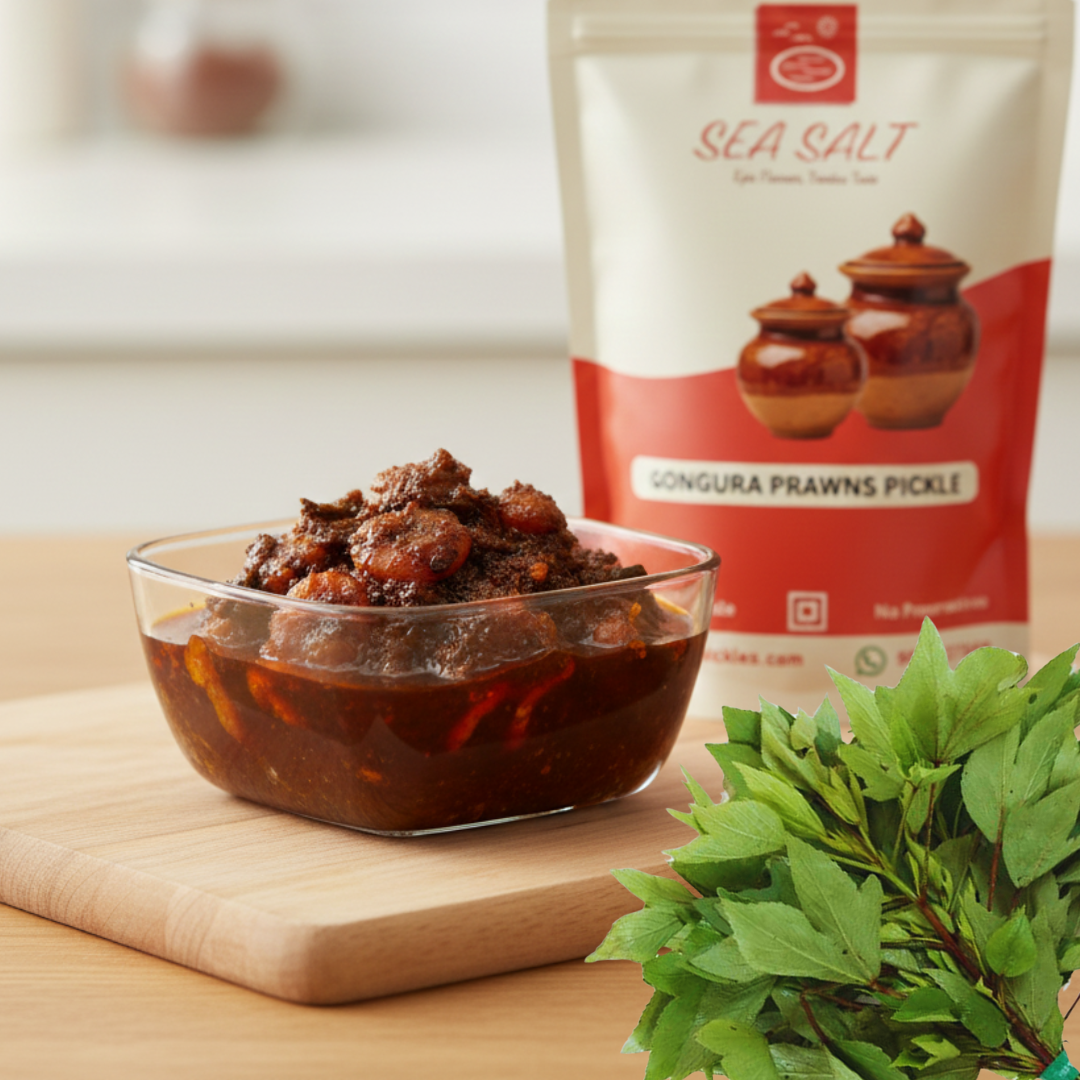
For instance, our exquisite Gongura Prawns, priced at Rs. 990, exemplifies our commitment. It's a harmonious blend of succulent prawns and the unique sourness of gongura, crafted with traditional spices and natural oils – a truly preservative free pickle that brings the authentic taste of Andhra to your table.
Making the Smart Choice for Your Family
The choice between homemade vs store pickles boils down to what you value most: immediate convenience or uncompromised quality, health, and authentic taste. By opting for homemade, you're not just choosing a condiment; you're choosing a healthier lifestyle, supporting traditional culinary practices, and ensuring your family enjoys food that is pure, nourishing, and delicious. You're choosing a truly natural pickle experience.
Frequently Asked Questions (FAQ)
Q1: Are homemade pickles safer than commercial ones?
Generally, yes. Homemade pickles made with fresh, quality ingredients and traditional methods (using natural preservatives like salt, oil, and spices) are often considered safer as they avoid the artificial chemicals and excessive processing found in many commercial varieties. You control the ingredients, ensuring a chemical free pickle.
Q2: What kind of preservatives are typically used in store-bought pickles?
Common artificial preservatives in commercial pickles include sodium benzoate, potassium sorbate, and sometimes high concentrations of acetic acid (vinegar). They may also contain artificial colors, flavors, and thickeners.
Q3: How can I tell if a pickle is truly natural or chemical free?
Always read the ingredient label. Look for short, recognizable ingredient lists without complex chemical names, artificial colors, or flavors. Brands like Sea Salt Pickles proudly list their natural ingredients, ensuring you get a truly natural pickle and preservative free pickles.
Q4: Do homemade pickles last as long as commercial ones?
While homemade pickles, when properly prepared and stored (e.g., in airtight jars, with sufficient oil, in a cool, dry place), can last for months, they typically do not match the extended shelf life of commercial pickles that rely on stronger artificial preservatives. However, their superior taste and health benefits often outweigh this difference.
Embrace the Homemade Difference with Sea Salt Pickles
The journey from fresh ingredients to a delectable pickle is an art, a science, and a tradition. When you choose homemade, you choose health, authenticity, and a taste that resonates with generations of culinary wisdom. Don't settle for less when it comes to the flavors that define your meals.
Ready to experience the true taste of tradition? Explore our range of authentic Andhra pickles, masalas, and snacks at seasaltpickles.com today and bring home the goodness of truly homemade, preservative-free delights!
🛒 Try Our Gongura Prawns
Authentic, homemade, no preservatives. Crafted with love in Hyderabad.
Shop Now →