Homemade vs Store Pickles: The Real Difference You Should Know
The Great Pickle Debate: Homemade vs Store Pickles
Ah, pickles! That tangy, spicy, and often indispensable accompaniment to countless meals, especially in Indian cuisine. From the fiery Andhra Avakaya to the comforting Lemon pickle, they evoke memories, enhance flavors, and stimulate appetites. But as you reach for that jar, have you ever paused to consider what truly distinguishes the homemade pickles from their mass-produced commercial counterparts? It's a question that goes beyond mere taste, delving into health, tradition, and the very essence of what we consume.
At Sea Salt Pickles, we believe in the unparalleled goodness of tradition. Hailing from Hyderabad, we pride ourselves on crafting premium homemade Andhra pickles, masalas, and snacks that honor authentic recipes and natural ingredients. This commitment drives us to explore the crucial comparison: homemade vs store pickles. Let's peel back the layers and discover why choosing a natural pickle, made with care and without artificial additives, makes all the difference.
The Heart of the Matter: What Defines "Homemade"?
The term "homemade" isn't just a label; it signifies a philosophy of food preparation rooted in tradition, quality, and personal touch. When you choose homemade, you're opting for a product crafted with attention to detail, much like a dish prepared in a family kitchen.
Ingredients: Freshness and Quality You Can Trust
The foundation of any great homemade pickle lies in its ingredients. Small-batch producers, and home cooks, typically source fresh, high-quality fruits, vegetables, and spices. Think of mangoes ripened on the tree, sun-dried chilies, and cold-pressed oils. The emphasis is on purity and potency, ensuring that each spoonful delivers vibrant flavor and genuine goodness.
Preparation: Traditional Methods and Unhurried Care
Homemade pickles often follow time-tested recipes passed down through generations. These methods prioritize natural fermentation processes, sun-drying, and slow maturation, allowing flavors to develop organically. There's no rush; patience is a key ingredient. This meticulous preparation ensures that the pickles retain their nutritional value and authentic taste, just like the traditional Andhra pickles we create at Sea Salt Pickles.
No Shortcuts: The Absence of Artificial Additives
Perhaps the most significant differentiator is what's *not* in homemade pickles. True homemade varieties are synonymous with being preservative free pickles. They rely on natural methods like oil, salt, and spices for preservation, rather than synthetic chemicals. This means you get a truly chemical free pickle, free from artificial colors, flavors, or stabilizers that are often found in commercial products. This commitment to naturalness is what makes a natural pickle genuinely healthy.
Unpacking Commercial Pickles: Convenience vs. Compromise
Commercial pickles, while offering convenience and widespread availability, often come with a hidden cost – a compromise on naturalness and traditional quality.
The Shelf-Life Imperative: Preservatives Galore
For commercial manufacturers, extended shelf-life is paramount for distribution and profitability. To achieve this, they commonly employ a range of artificial preservatives such as sodium benzoate, potassium sorbate, or acetic acid (in higher concentrations than traditional methods). While deemed safe in regulated amounts, these additives can alter the natural flavor profile and raise concerns for those seeking a purer diet. This is a key distinction when considering homemade vs store pickles.
Mass Production: Standardized Taste and Quality Concerns
Commercial operations prioritize consistency and scale. This often means using standardized, sometimes lower-grade, ingredients and accelerated processing methods. The goal is to produce large quantities with uniform taste, which can lead to a less nuanced flavor compared to the complex profiles of a slow-made, natural pickle. The personal touch and nuanced flavors of regional recipes can be lost in this process.
Ingredient Sourcing: Cost-Efficiency Over Purity
To keep costs down, commercial brands might source ingredients based on price rather than premium quality. This can sometimes mean less ripe fruits, non-cold-pressed oils, or generic spice blends. While many commercial brands strive for quality, the economic pressures of mass production can sometimes lead to shortcuts that impact the overall purity and flavor of the final product.
Homemade vs Store Pickles: A Head-to-Head Comparison
Let's pit these two categories against each other to highlight the core differences that impact your plate and your health.
Taste and Aroma: A Symphony of Flavors vs. Uniformity
Homemade: Bursting with authentic, vibrant flavors that reflect the quality of ingredients and traditional preparation. Each batch might have subtle variations, a testament to its artisanal nature. The aroma is often rich, spicy, and inviting, a true sensory delight. Commercial: Often characterized by a more uniform, sometimes blander, taste profile. The flavors might be dominated by acidity or artificial enhancements, lacking the depth and complexity of a traditionally made natural pickle.
Nutritional Value: Health in Every Bite vs. Empty Calories
Homemade: By using fresh ingredients and minimal processing, homemade pickles often retain more of their natural vitamins, minerals, and beneficial enzymes (especially if naturally fermented). Being preservative free pickles means avoiding synthetic additives that can impact gut health. Commercial: While some nutrients might be present, the extensive processing, high sodium content, and presence of artificial additives can diminish their overall nutritional appeal. The focus shifts from nourishing to merely flavoring.
Safety and Transparency: Knowing What You Eat
Homemade: Offers greater transparency. You (or the artisan making it) know exactly what goes into the jar. No hidden ingredients, no confusing chemical names. This gives peace of mind, especially for those with dietary restrictions or health concerns, ensuring a truly chemical free pickle. Commercial: Requires consumers to trust brand labels and regulatory bodies. While regulated, the sheer number of ingredients, including obscure additives, can make it difficult for an average consumer to understand fully what they are consuming.
Cultural Connection: More Than Just Food
Homemade: Pickles are often deeply intertwined with cultural heritage and family recipes. They carry stories, traditions, and a sense of belonging. Each bite connects you to generations of culinary wisdom. Commercial: While fulfilling a functional need, commercial pickles typically lack this emotional and cultural depth, serving primarily as a commodity.
Why Choose a Natural, Chemical-Free Pickle?
The choice is clear for those prioritizing health, authentic taste, and traditional values. Opting for a natural pickle or a chemical free pickle means making a conscious decision for your well-being. By avoiding artificial preservatives and excessive processing, you reduce your intake of potentially harmful substances and support your body's natural functions.
Moreover, embracing preservative free pickles allows you to savor the true, unadulterated flavors of regional cuisine. It's about experiencing food as it was meant to be – wholesome, flavorful, and made with genuine care. For instance, an organic pickle, if made with certified organic ingredients, further elevates this commitment to purity, ensuring no pesticides or synthetic fertilizers touch your food.
Experience the Authentic Taste of Tradition with Sea Salt Pickles
At Sea Salt Pickles, we bridge the gap between traditional home kitchens and your modern pantry. We understand the value of a truly homemade product. Our premium Andhra pickles are crafted with the utmost care, using fresh, high-quality ingredients and time-honored family recipes.
When you choose Sea Salt Pickles, you're choosing:
- Authentic regional flavors from Hyderabad.
- Truly preservative free pickles and snacks.
- A natural pickle made with fresh, quality ingredients.
- The peace of mind that comes from a chemical free pickle.
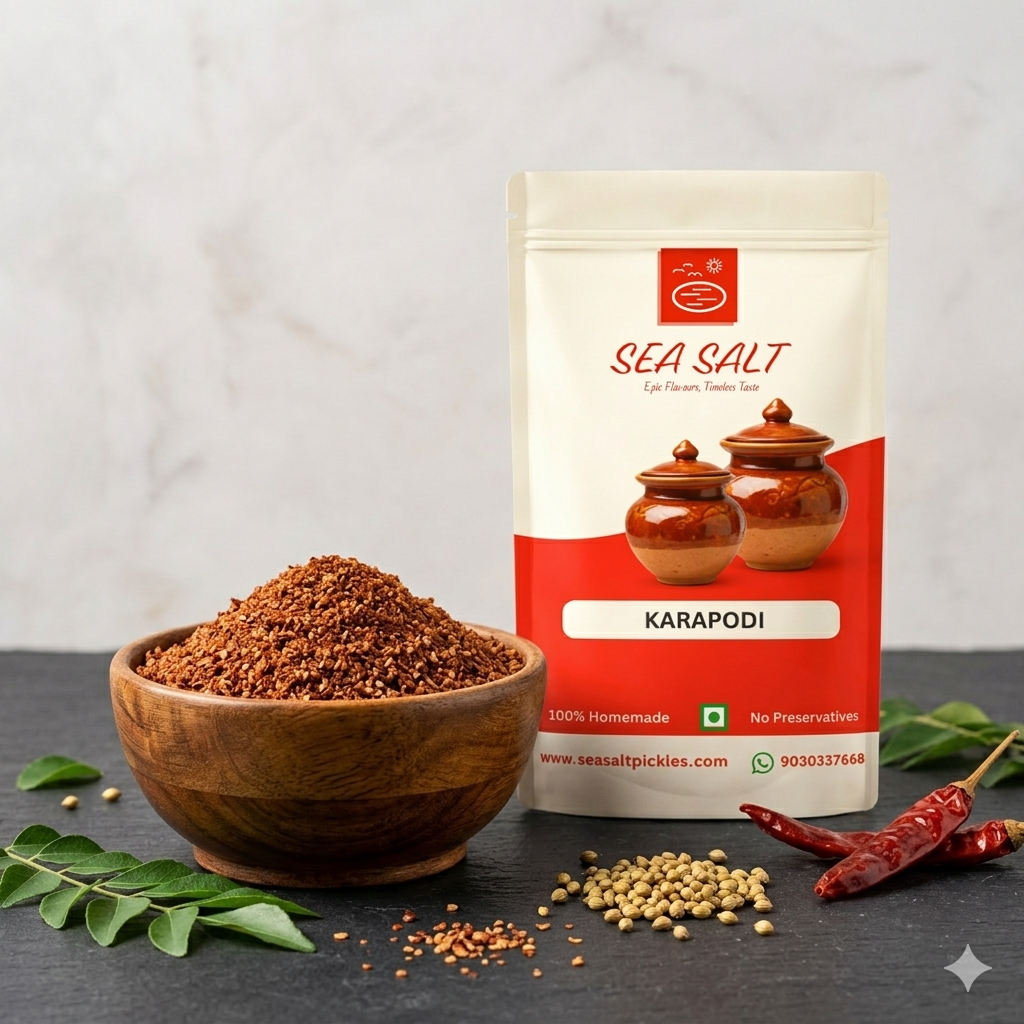
Beyond our exquisite pickles, explore our range of traditional masalas and snacks. A perfect example is our Kara Podi, a versatile spice powder that can elevate any meal. Just like our pickles, it embodies the homemade goodness and authentic flavors we stand for.
Frequently Asked Questions (FAQ)
Q1: Are homemade pickles healthier than store-bought ones?
A1: Generally, yes. Homemade pickles often contain fewer artificial additives, preservatives, and unhealthy fats. They retain more natural nutrients from fresh ingredients and, if fermented, can offer probiotics beneficial for gut health.
Q2: What kind of preservatives are typically found in commercial pickles?
A2: Commercial pickles often use synthetic preservatives like sodium benzoate, potassium sorbate, acetic acid (in higher concentrations), and sometimes artificial colors and flavors to extend shelf life and maintain uniform appearance.
Q3: How long do homemade pickles typically last without artificial preservatives?
A3: The shelf life of homemade pickles varies depending on the ingredients, oil content, salt, and storage conditions. When stored correctly in a cool, dry place, and using proper traditional methods (like oil and salt as natural preservatives), many homemade Indian pickles can last from 6 months to over a year.
Q4: Can I find authentic homemade taste in commercially available pickles?
A4: While some commercial brands strive for authentic flavors, it's challenging to replicate the exact taste and texture of truly homemade pickles due to mass production processes and the use of preservatives. Brands like Sea Salt Pickles specialize in bridging this gap by offering traditionally made, small-batch pickles with homemade authenticity.
The Verdict: Embrace the Homemade Difference
In the ongoing debate of homemade vs store pickles, the scales clearly tip towards homemade for those who value health, authentic taste, and traditional purity. Choosing a preservative free pickle, a natural pickle, or a chemical free pickle isn't just a culinary preference; it's a lifestyle choice that celebrates quality, transparency, and well-being.
Rediscover the rich, unadulterated flavors that only genuine homemade pickles can offer. Make the switch and experience the difference that care, tradition, and natural ingredients bring to your plate.
Ready to elevate your meals with authentic Andhra flavors? Explore our exquisite range of homemade pickles, masalas, and snacks today! Shop now at seasaltpickles.com.