How Pickles Are Made: Traditional Methods & Andhra Secrets
The Timeless Art of Traditional Pickle Making
In a world of fast-paced convenience, some traditions stand firm, preserving not just food but also cultural heritage. The art of pickle making is one such timeless practice, especially cherished in homes across India. At Sea Salt Pickles, we believe in honoring these age-old techniques, bringing you the authentic taste of Andhra Pradesh. But have you ever wondered how pickles are made, particularly following the methods passed down through generations?
Traditional pickle making is more than just a culinary process; it's a blend of science, patience, and love. It involves meticulously chosen ingredients, precise spice blends, and natural preservation methods that result in robust flavors and extended shelf life. From the selection of fresh produce to the final maturation, every step is crucial in crafting the perfect batch of homemade achar.
Understanding the Core: How Pickles Are Made Through Fermentation
At the heart of many traditional pickles lies a fascinating natural process: pickle fermentation. This ancient method of preservation predates refrigeration and chemicals, relying on beneficial microorganisms to transform ingredients and impart unique flavors and textures. While some pickles use vinegar for quick preservation, true traditional pickles often harness the power of lacto-fermentation.
During pickle fermentation, naturally occurring lactic acid bacteria (LAB) consume the sugars present in the fruits or vegetables, converting them into lactic acid. This acid acts as a natural preservative, inhibiting the growth of harmful bacteria and giving pickles their characteristic tangy flavor. It’s a slow, deliberate process that allows flavors to deepen and meld, creating a complexity that quick-preserved pickles simply cannot match. The magic truly begins with the right environment and, crucially, the right kind of salt.
The Craft: Step-by-Step Traditional Pickle Making Process
Embarking on the journey of traditional pickle making reveals a meticulous process, each step vital for the final product's quality and taste. Here’s a closer look at how pickles are made, following methods revered for centuries:
1. Ingredient Selection & Preparation
The foundation of any great pickle is its ingredients. We begin by sourcing the freshest, highest-quality fruits or vegetables – whether it's succulent mangoes, ripe tomatoes, or vibrant chillies. For Andhra pickles, freshness is paramount. Once selected, these ingredients are thoroughly washed and, critically, dried completely. Any residual moisture can jeopardize the fermentation process and spoil the pickle. Depending on the recipe, they are then chopped, grated, or left whole.
2. The Art of Sea Salt Pickling
Salt plays an indispensable role in traditional pickle making. It not only draws out moisture from the produce but also creates an environment conducive to beneficial bacteria while inhibiting undesirable ones. At Sea Salt Pickles, we prioritize sea salt pickling. Sea salt, with its natural minerals and coarser texture, contributes to a cleaner flavor profile and aids in the slow, controlled fermentation process better than refined salts. The produce is often layered with salt or submerged in a brine solution, initiating the first stage of preservation.
3. Blending the Authentic Andhra Masalas
This is where the soul of Andhra pickles truly shines. Unlike other regional pickles, Andhra homemade achar is renowned for its bold, complex spice blends. Essential spices include roasted fenugreek (methi) powder, mustard (rai) powder, turmeric, asafoetida (hing), and a generous amount of premium red chilli powder – often Guntur Sannam or Byadgi varieties, known for their color and heat. These spices are carefully ground and blended, sometimes with garlic, ginger, or curry leaves, to create a potent, aromatic mixture that defines the pickle's character.
4. Mixing, Marinating & Sun-Drying
The prepared ingredients are then combined with the aromatic spice blend and high-quality oil (often gingelly/sesame oil or groundnut oil). This mixture is thoroughly combined, ensuring every piece of fruit or vegetable is coated. For many traditional Andhra pickles, the mixture is then spread out on clean, dry sheets and left to sun-dry for several days. This crucial step concentrates flavors, removes excess moisture, and allows the ingredients to absorb the spices deeply, contributing to the pickle's longevity and unique texture. This sun-drying process is a hallmark of authentic homemade achar.
5. Fermentation & Maturation
Once the sun-drying is complete, the pickle is carefully transferred into sterilized ceramic jars (bharanis) or glass containers. These jars are then sealed and often left in a warm, sunny spot for several weeks or even months. This is the period of pickle fermentation and maturation. During this time, the flavors continue to develop, the spices infuse deeper, and the pickle achieves its desired consistency and pungency. Regular stirring (with clean, dry utensils) is sometimes part of the process to ensure even flavor distribution and prevent spoilage.
6. Storage for Longevity
Proper storage is key to enjoying traditional pickles for months, or even years. Once fully matured, the jars are stored in a cool, dry place, away from direct sunlight. A layer of oil on top acts as a natural seal, preventing air exposure and spoilage. When serving, always use a clean, dry spoon to maintain hygiene and prolong the pickle's life.
The Andhra Secret: A Legacy of Flavor in Homemade Achar
What sets Andhra pickles apart, making them a global favorite, is not just the process but the passion and precision embedded in every step. The generous use of quality spices, the reliance on sun-drying, and the unique combination of ingredients create an unparalleled flavor profile – spicy, tangy, and incredibly aromatic. From the fiery Avakai to the tangy Gongura, each pickle tells a story of the region's rich culinary heritage.
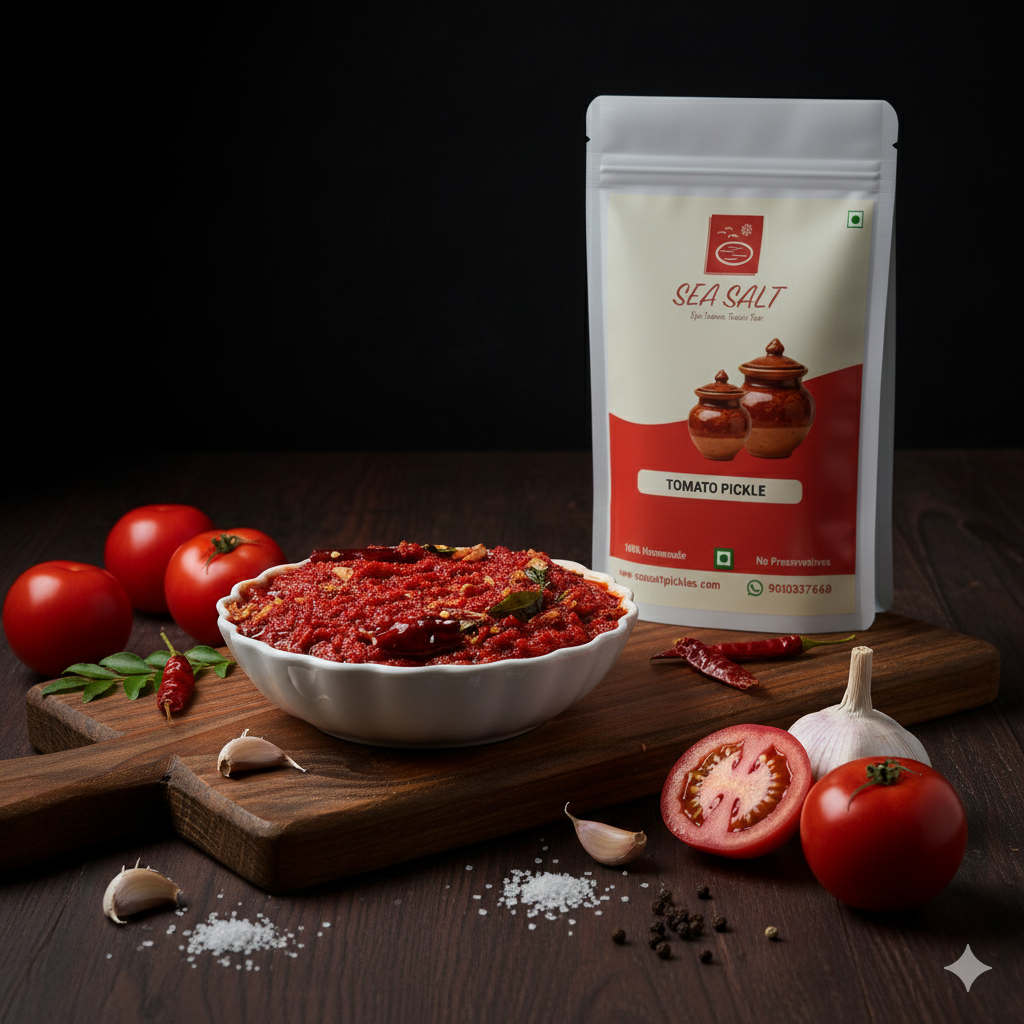
Our own Tomato Pickle at Sea Salt Pickles perfectly embodies this tradition. Priced at just Rs.365, it's crafted using sun-ripened tomatoes, a secret blend of hand-ground spices, and the same careful sea salt pickling techniques. It's a testament to the fact that when it comes to homemade achar, tradition is the best ingredient.
Why Choose Traditional Pickle Making?
Beyond nostalgia and taste, there are compelling reasons to appreciate and choose pickles made through traditional methods:
- Unmatched Flavor Complexity: The slow pickle fermentation and maturation process allows flavors to develop depth and nuance that quick methods cannot replicate.
- Health Benefits: Fermented pickles are a natural source of probiotics, beneficial bacteria that support gut health and digestion.
- Natural Preservation: Traditional methods rely on salt, spices, and natural acids, minimizing the need for artificial preservatives and chemicals.
- Cultural Connection: Each bite connects you to generations of culinary wisdom and regional heritage.
- Superior Quality: The meticulous attention to detail from ingredient selection to storage results in a superior, authentic product.
FAQ: Understanding Traditional Pickles
Q1: What's the main difference between traditional and commercial pickles?
Traditional pickles often rely on natural fermentation and sun-drying, using minimal preservatives. Commercial pickles frequently use vinegar, artificial colors, and chemical preservatives for faster production and extended shelf life, often sacrificing flavor depth and probiotic benefits.
Q2: Is pickle fermentation safe?
Yes, when done correctly, pickle fermentation is very safe. The high salt concentration and the lactic acid produced by beneficial bacteria create an acidic environment that inhibits the growth of harmful pathogens. Proper hygiene and sterilization of equipment are crucial.
Q3: How long do traditional pickles last?
With proper storage in a cool, dry place and a layer of oil on top, many traditional pickles can last for several months to a year, or even longer. Always use a clean, dry spoon to prevent contamination and extend shelf life.
Q4: Can I use any salt for pickling?
While various salts can be used, sea salt pickling is highly recommended for traditional methods. Fine-grained iodized table salt can sometimes make brines cloudy or alter flavors due to additives. Non-iodized sea salt or pickling salt is preferred for its purity and consistent results.
Experience the Legacy with Sea Salt Pickles
The journey of traditional pickle making is a testament to the enduring power of time-honored techniques and natural processes. It’s a craft that produces not just food, but a legacy of flavor and well-being. At Sea Salt Pickles, we are committed to upholding these traditions, ensuring that every jar of our homemade achar delivers an authentic taste experience, just like grandma used to make.
Ready to savor the true taste of tradition? Shop our exquisite range of Andhra pickles, masalas, and snacks today. Discover the difference that genuine ingredients, meticulous processes, and a passion for heritage make. Your culinary adventure awaits!
🛒 Try Our Tomato Pickle
Authentic, homemade, no preservatives. Crafted with love in Hyderabad.
Shop Now →