Indian Pickle Varieties: Your Regional Guide to Achar Types
Indian Pickle Varieties: Your Regional Guide to Achar Types
India is a land of unparalleled culinary diversity, where every region, every state, and often every household, boasts its own unique flavors and traditions. At the heart of this vibrant food culture lies the humble yet mighty pickle – or ‘achar’ as it's lovingly known. More than just a condiment, pickles are a celebration of seasonal bounty, a testament to age-old preservation techniques, and an indispensable part of almost every Indian meal.
From the fiery, oil-laden concoctions of the South to the tangy, sweet-and-sour delights of the West, the sheer range of indian pickle varieties is astounding. This comprehensive guide will take you on a flavorful journey across the subcontinent, exploring the distinctive achar types that define India's rich culinary landscape. Get ready to discover the regional nuances that make each pickle a unique masterpiece.
The North: Bold & Robust Achar Types
Northern Indian pickles are often characterized by their generous use of mustard oil, a robust spice blend, and a hearty texture. They are typically spicy, tangy, and designed to complement rich gravies and flatbreads.
Mango Pickle (Aam ka Achar)
The undisputed king of North Indian pickles, Aam ka Achar is a staple in almost every home. Raw mangoes are cut into pieces, sun-dried, and then marinated in a potent mix of mustard seeds, fenugreek, red chili powder, turmeric, and asafoetida, all steeped in pungent mustard oil. Its intense flavor and long shelf life make it a year-round favorite.
Mixed Vegetable Pickle (Mixed Achar)
A delightful medley of seasonal vegetables like carrots, cauliflower, turnips, and green beans, this pickle offers a burst of varied textures and flavors. Each vegetable absorbs the tangy-spicy masala, creating a vibrant and versatile accompaniment.
Lemon Pickle (Nimbu Achar)
Whether whole or cut, lemons are pickled with their skin, often using their own juice and a blend of salt, red chili, and sometimes sugar or jaggery. The long fermentation process tenderizes the lemons, resulting in a wonderfully tangy, slightly bitter, and aromatic pickle that aids digestion.
Chilli Pickle (Mirchi Achar)
For those who love a fiery kick, the North offers various chilli pickles. Green chillies are typically slit and stuffed with a spicy mixture, while red chillies might be ground into a paste or pickled whole. They range from mildly piquant to intensely hot, perfect for livening up any dish.
The East: Tangy, Sweet & Unique Regional Pickles India
Eastern India's pickles often feature unique ingredients and a balance of sweet, sour, and spicy notes, reflecting the region's diverse culinary influences.
Mustard Pickle (Shorshe Achar - Bengal)
In Bengal, mustard is not just an oil but also a key pickling ingredient. Freshly ground mustard seeds, often fermented, form the base of many pickles, lending a pungent, sharp flavor. Green mangoes, chillies, or even fish can be pickled in this distinct style.
Bamboo Shoot Pickle (Bambusa Achar - North-East)
The Northeastern states, particularly Assam and Nagaland, are famous for their fermented bamboo shoot pickles. With its unique earthy aroma and tangy crunch, this pickle is often spicy and pairs wonderfully with rice and meat dishes, showcasing truly unique regional pickles India has to offer.
Tomato Pickle (Tamatar Achar - Bihar/Odisha)
While found across India, Eastern versions of tomato pickle often incorporate a hint of jaggery or sugar, balancing the tang of tomatoes with a touch of sweetness, alongside traditional spices and mustard oil.
The West: A Blend of Sweet, Sour & Spicy Flavors
Western Indian pickles are known for their intriguing balance of sweet, sour, and spicy, often incorporating jaggery, fenugreek, and unique local ingredients.
Gujarati Mango Pickle (Gorkeri/Chundo)
Gujarat offers some of the most distinctive mango pickles. Gorkeri is a sweet and spicy pickle made with raw mangoes and jaggery, while Chundo is a grated mango relish, often sun-cooked, with a spicy-sweet-sour profile. These pickles are integral to Gujarati thalis.
Garlic Pickle (Lasun Achar - Maharashtra/Goa)
Pungent and flavorful, garlic pickle is popular in Maharashtra and Goa. Whole garlic cloves are pickled in a spicy, often tangy masala, sometimes with a hint of vinegar, making it a robust accompaniment.
Ker Sangri Pickle (Rajasthan)
From the arid lands of Rajasthan comes Ker Sangri pickle, made from dried wild berries (ker) and beans (sangri). These unique desert ingredients are rehydrated and pickled with a spicy, tangy masala, offering a taste of Rajasthan's unique culinary heritage.
The South: A World of Fermented & Fiery South Indian Pickles
Southern India is a powerhouse of pickle innovation, famous for its intensely spicy, oil-rich, and often fermented south indian pickles. The use of gingelly (sesame) oil, mustard seeds, and curry leaves is common, lending a distinctive aroma and flavor profile.
Andhra's Fiery Delights: Telugu Pickles & More
Andhra Pradesh and Telangana are legendary for their extremely spicy and flavorful telugu pickles, often made with generous amounts of red chili powder and garlic. They are an essential part of the Andhra culinary identity.
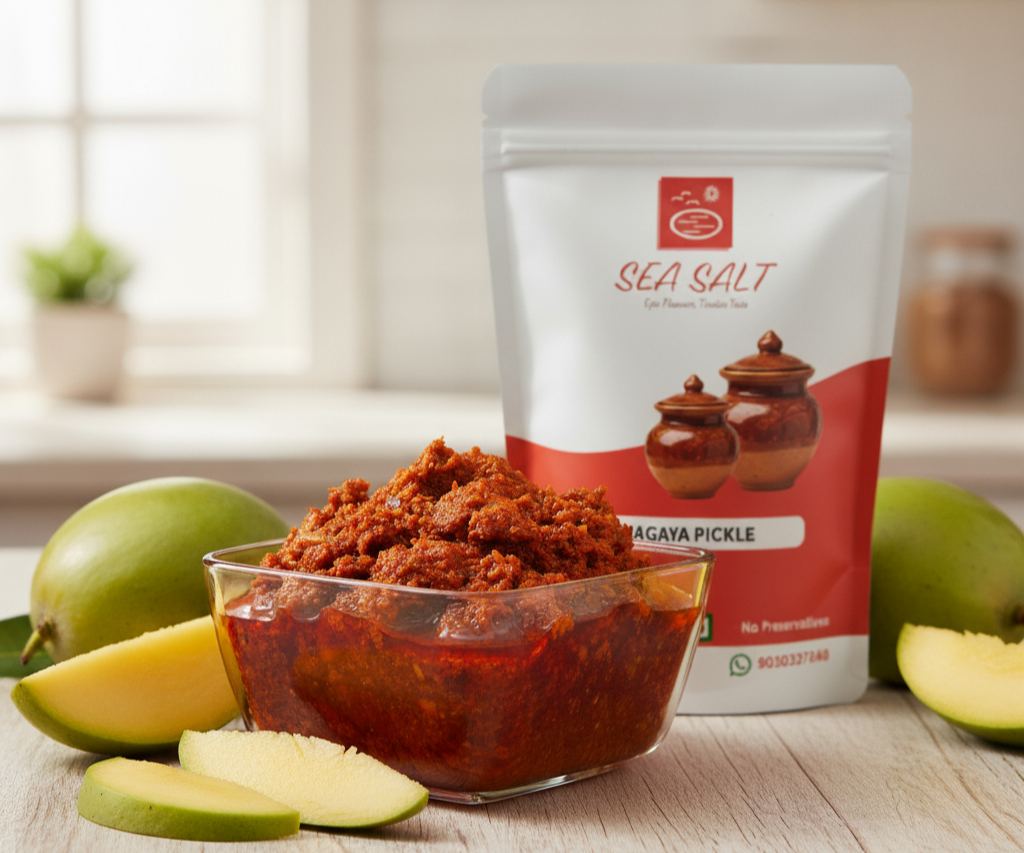
- Maagaya (Dried Mango Pickle): A quintessential Andhra specialty, Maagaya is made from sun-dried raw mangoes, which lend it an intense, concentrated sourness. It's then combined with a fiery blend of chili powder, mustard powder, fenugreek, and garlic, all preserved in gingelly oil. The result is a deeply flavorful, tangy, and spicy pickle that’s simply addictive. You can experience the authentic taste of this traditional delicacy with our premium Maagaya at Sea Salt Pickles.
- Avakaya (Mango Pickle): Perhaps the most famous of all Andhra pickles, Avakaya is made with large chunks of raw mango, mustard powder, red chili powder, fenugreek, and a generous amount of gingelly oil. It's a seasonal delight, eagerly awaited during mango season, and comes in many variations (with garlic, without garlic, etc.).
- Gongura Pickle: A unique and highly prized pickle made from sorrel leaves (gongura). Its distinct sour taste, combined with a spicy masala and garlic, makes it incredibly popular and versatile.
- Tomato Pickle: Andhra-style tomato pickle is a rich, spicy, and tangy condiment, often cooked down to a jam-like consistency with a potent spice blend, garlic, and gingelly oil.
Karnataka's Spicy & Savory Creations
- Tender Mango Pickle (Kadumanga Achar): Similar to Kerala’s tender mango pickle, this version uses small, whole raw mangoes that are brined and then pickled with a spicy masala, often involving mustard and fenugreek.
- Lemon Pickle (Nimbe Hannina Uppinakayi): Karnataka’s lemon pickle often features whole or quartered lemons, aged in their own juices with a spicy-tangy masala.
Tamil Nadu's Distinctive Uppukari
- Narthangai Pickle (Citron Pickle): A unique pickle made from the large, bumpy citron fruit. It's incredibly tangy and slightly bitter, often cured in salt for a long time before being spiced.
- Vadumangai (Baby Mango Pickle): Tiny, tender green mangoes are pickled whole in brine and a spicy mixture, offering a delightful crunch and intense flavor.
Kerala's Coastal Flavors
- Fish Pickle (Meen Achar): A unique non-vegetarian pickle, small pieces of fried fish are pickled in a spicy, tangy gravy with ginger, garlic, and vinegar, reflecting Kerala's coastal heritage.
- Prawn Pickle (Chemmeen Achar): Similar to fish pickle, but made with succulent prawns, offering a rich, spicy, and umami-packed flavor.
- Lemon Pickle (Naranga Achar): Kerala's lemon pickle often includes green chillies, ginger, and garlic, giving it a vibrant, spicy, and aromatic profile.
Why Indian Pickles Stand Apart
The tradition of making and consuming pickles in India is deeply ingrained in its culture. Beyond their role as flavor enhancers, pickles are an art form of preservation, allowing the enjoyment of seasonal fruits and vegetables throughout the year. They bring balance to meals, adding a punch of spice, tang, or sweetness that elevates even the simplest dishes. Each regional pickle tells a story of local ingredients, climate, and culinary ingenuity, making the journey through indian pickle varieties a truly fascinating one.
Frequently Asked Questions about Indian Pickles
Q1: What makes Indian pickles so diverse?
Indian pickles are diverse due to regional differences in climate, available produce, culinary traditions, and spice preferences. Each state and community has developed unique recipes using local ingredients and distinct spice blends.
Q2: Are all Indian pickles very spicy?
No, not all Indian pickles are very spicy. While many, especially from the South, are known for their heat, there are also sweet, tangy, and mildly spiced varieties (like Gujarati Chundo or some lemon pickles) that cater to different palates.
Q3: How are pickles preserved in India?
Indian pickles are primarily preserved using generous amounts of salt, oil (mustard, gingelly, groundnut), vinegar, and spices. Sun-drying is also a common technique to remove moisture and extend shelf life, aiding in natural fermentation.
Q4: What are some unique regional ingredients used in Indian pickles?
Unique ingredients include bamboo shoots (North-East), Ker Sangri (Rajasthan), Gongura leaves (Andhra), Narthangai (Citron - Tamil Nadu), and various seafood like fish and prawns (Kerala), showcasing the ingenuity in using local produce.
Embark on Your Own Pickle Journey
From the fiery kitchens of Andhra to the tangy traditions of Gujarat, the world of indian pickle varieties is an endless source of culinary delight. Each spoonful offers a taste of heritage, a burst of flavor, and a connection to India's incredible food legacy. We hope this guide inspires you to explore these wonderful achar types and perhaps even discover a new favorite.
Ready to bring authentic Indian flavors to your table? Explore our range of premium homemade Andhra pickles, masalas, and snacks. Experience the taste of tradition and quality, crafted with care in Hyderabad. Shop now at Sea Salt Pickles and savor the difference!